Be Good Enough

Driving to school one morning, Chris Evans announced on Virgin Radio that ‘perfection is the enemy of good enough’. It had been the usual chaotic start to the day. I ran around making breakfast, looking for lost shoes, answering emails, yelling the time to the kids every fifteen minutes and praying that they really were getting dressed. The traffic had presented its usual problems and as is routine, I found myself hurtling along the back roads, hoping that nothing would be coming in the opposite direction.
Just as I rounded a particularly sharp bend in the wrong gear, Chris’s words reached my ears. ‘You don’t need to be perfect; you just need to be good enough’. I slowed down, caught my breath and listened. He was talking about a book called ‘The Perfection Trap’ and the author that he was due to interview later on, Professor Thomas Curran. ‘There, listen to this kids’, I yelled (I have to shout because no one takes any notice otherwise). ‘This is what you have to remember today. Just try to be good enough.’ Typically, they both just ignored me.
By the time I got home, I did manage to listen to some of the interview. However, by then I was working and no longer able to pay attention. But that phrase ‘perfection is the enemy of good enough’ stayed with me. As the day wore on and I got irritated with the things I needed to do, I kept repeating it to myself. Keep on going; just get it done, it doesn’t need to be perfect.

I’ve spent all my life, from my time as a teenager until now, striving to be perfect. And I haven’t succeeded. So, I’ve considered this to be failure. The consequence of which is that I believe that I have failed and my life has been a waste. Sometimes I’ve got close to perfection. Other times, I’ve tried so hard and then, halfway to achieving what I want, I’ve realised that it is a pointless search. So, I’ve given up and not tried anymore. Seeing this written down here, I can tell you that it makes me feel very, very sad. I don’t believe that I have ever truly reached my potential and I wonder if I could have done more.
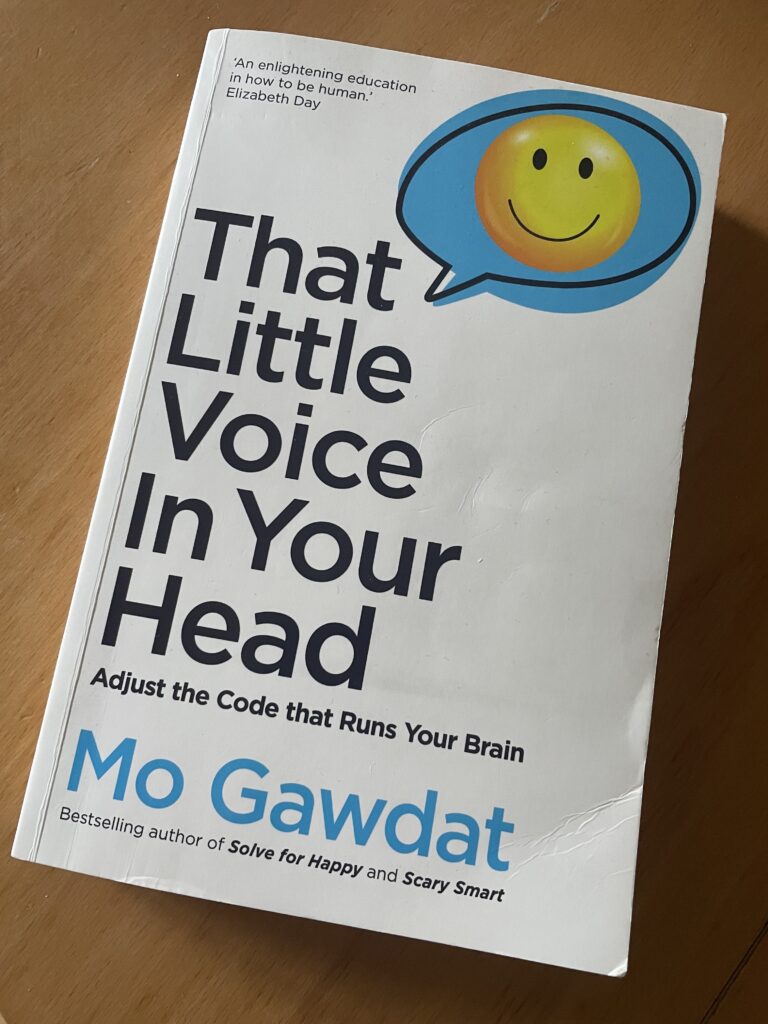
Intrigued by the parts of the interview I heard, I looked Professor Curran up. (thomascurran.co.uk) He’s a Professor of Behavioural Psychology and Perfectionism is his primary area of expertise. Intrigued at the idea that Perfectionism is a thing to be studied (and being a sucker for a psychology/self-help book), I bought The Perfection Trap. I’ve now read it and it explains a lot.

Professor Curran describes Perfectionism as our favourite flaw. Think about it; how many times have you been asked in a job interview, what are your strengths and weaknesses and responded ‘oh, sometimes I’m a bit of a perfectionist’. It’s a cliché and a joke. We laugh at it. Except it isn’t funny. Perfection is an impossible goal. Trying to reach it sends people mad. It is unattainable. It’s a malignant ideal. Yet we persist in believing in it.
According to the Prof, there are three types of Perfectionism:
- Self-oriented Perfectionism – where you believe you must be perfect and nothing but being perfect will do. This is the standard that you set yourself. The voice in your head telling you that you must be perfect all the time or you are failing.
- Socially Prescribed Perfectionism – where you believe that others expect you to be perfect. Where you are sure that everybody thinks that you are perfect and so you cannot not be perfect for fear of what they might think about you or how you will be judged.
- Other–oriented Perfectionism – the belief that all other people out there are perfect. This is us watching the TV, or YouTube or TikTok or Instagram and believing the rest of the world is perfect and that everybody gets it right all the time. And if they are all so perfect, why can’t you be the same? It has to be possible.
Of course, those of us who struggle with perfectionist ideals don’t just suffer from one of the above. Nope, we normally have issues with all three. I know I do. I made sure that I always had a chicken in the freezer for 15 years of my life so that (a) if I need to, I could be the perfect wife/mother/host and able to rustle up roast chicken at a moment’s notice; (b) so that I can reassure myself that if I need to rustle up a that dinner for other people they would believe I was able to deal with any emergency situation; and (c) so that I could compare myself with the rest of the world, who (if they were faced with an urgent food situation) would always be able to cope with aplomb because that’s the way it is on the TV.
How mad is that?
The book talks about how much damage living like this does to your mental health. How believing that ‘what doesn’t kill you makes you stronger’ is the worst possible way to live your life. Why do I think that being taught that to be the best and perfect means that I have to suffer to get there? Which teacher decided that was a good idea? Worse still, why do we go along with this awful belief that to be the best we can be, means that you must turn into someone so tough, so uncompromising and so fearless that you inevitably become reclusive, tormented and mentally distressed?
The worst sort of perfectionism though is the Other-oriented Perfectionism. It’s the Perfectionism where we spend hours looking at the amazing lives of others on Facebook and all of the other social media platforms and wonder why your own isn’t so fabulous. Then you try to make it amazing but nothing ever lives up to your expectations. But your expectations weren’t real to begin with. This is because the person whose life you are so desperate to emulate has spent so much time creating a façade that isn’t really real either. This is most likely due to them suffering from extreme levels of Socially Prescribed Perfectionism. They believe that they must present their perfect life to others or suffer criticism.
So, the cycle continues. We believe we must be perfect. And then we look at others and believe them to be perfect. I try to live up to this because I am afraid that I will be judged if I am not perfect. In doing so, we are just driving ourselves slowly crazy. That is why mental health issues are at an all time high and why so many of us are anxious and depressed because our lives can never live up to what we think they should be.
I am about to start another week of work, whilst trying to juggle two kids, a husband and all the problems that we all have on a daily basis. It will be full of ‘did I send that email?’ ‘Have we got milk in the fridge?’ ‘How long will it take to get to that meeting?’ ‘Do we have anything for dinner’. This week, I’m going to stop crippling myself with guilt and remember that I am doing good enough. I’m not going to beat myself up when the PE kits aren’t ready, the beds aren’t made and I didn’t prepare the document I promised I would finish. I’m going to think that I am good enough. I think it’s about time we all did.